
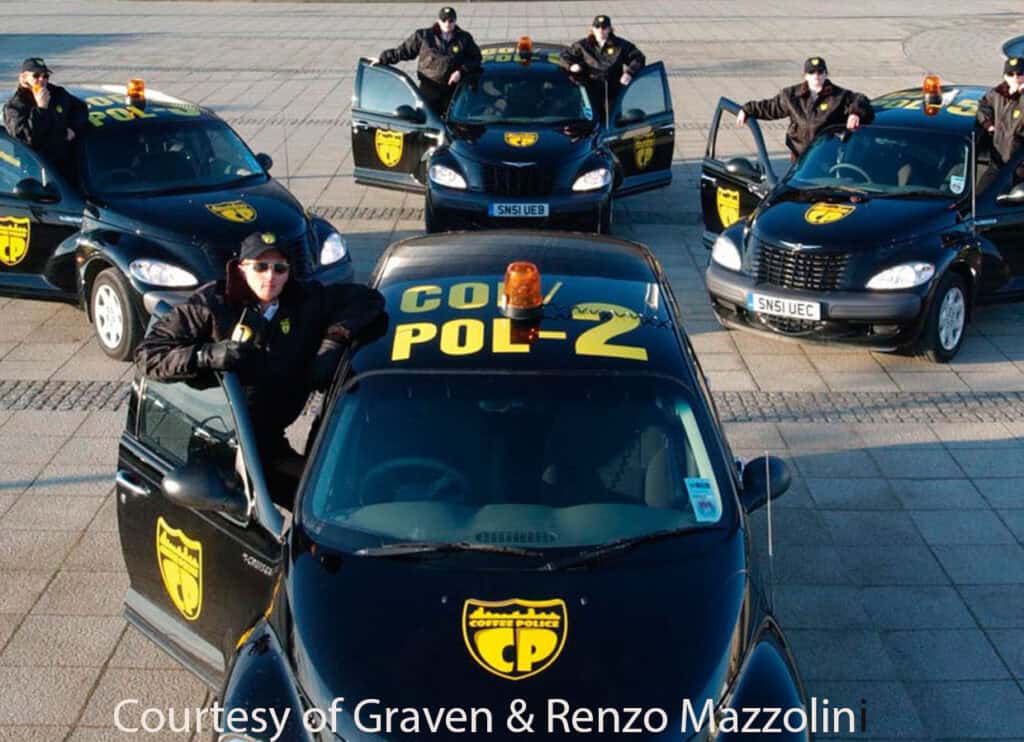
The Coffee Police Are Back?
Post World of Coffee Copenhagen 2024. In the early days of JGC the late (and great) David Williamson MD from
The commercial coffee world has an addiction to cheap coffee. This is a sensitive subject and not wanting to tell tales out of school (#coffeebitch I hear you cry!) we should look at some facts and wonder.
The Peruvian Harvest, conveniently often first arrives at our shores at the end of the year along with other fine South American, coffee crops like Brazil, Ecuador, and Bolivia (if you are lucky).
The sheer amount of physical, manual labour in producing and transporting coffee in some areas of Peru is unthinkable, yet the appetite for the coffee world to add value is shy and this is for a few reasons. There is a tendency to promote some coffees from Peru, as better than they are, in a sows-ear, silk purse kind of way Jose!
The amazing thing is that the Cup of Excellence held its first competition in Peru last Autumn. This is a way that will reward producers properly for producing better coffee. This is the simplistic problem and resolution. The physical and financial demand for high-quality coffee from Peru remains a big question. For as long as the average commercial coffee is the expectation, and the suppression if you will. With tiny amounts of high-quality coffee coming out of Bolivia and Ecuador, that could double their production and still choose their prices, makes me wonder about the value gap. We now pay approximately 85% of a single farm from Guatemala, for a high-quality lot from Peru. We are paying twice this for coffee from Ecuador.
Post World of Coffee Copenhagen 2024. In the early days of JGC the late (and great) David Williamson MD from
Is 89C the new 96?
This post is about the question of brew temperatures lowering to accommodate darker roasted lower quality coffees.
Muskhan Khanna stands out in the professional tea scene. With a university degree from Birmingham UK. It would be fair

For a long time now, I have said that we are all experts in our own experience! It’s tacky, but
Espresso Brew Ratios Commercial coffee machines are built tough; water pumps run at very high pressures and portafilter baskets accept

Hi there, I hope you are at least half as excited as I am about 2024. One of our plans

I should probably be writing about Christmas trees, Nisse, and Glögg, but over the last month, there has been a
Back at the launch of Fairtrade in the UK, I was a young twenty-something (optimistic) naive guy who went to