
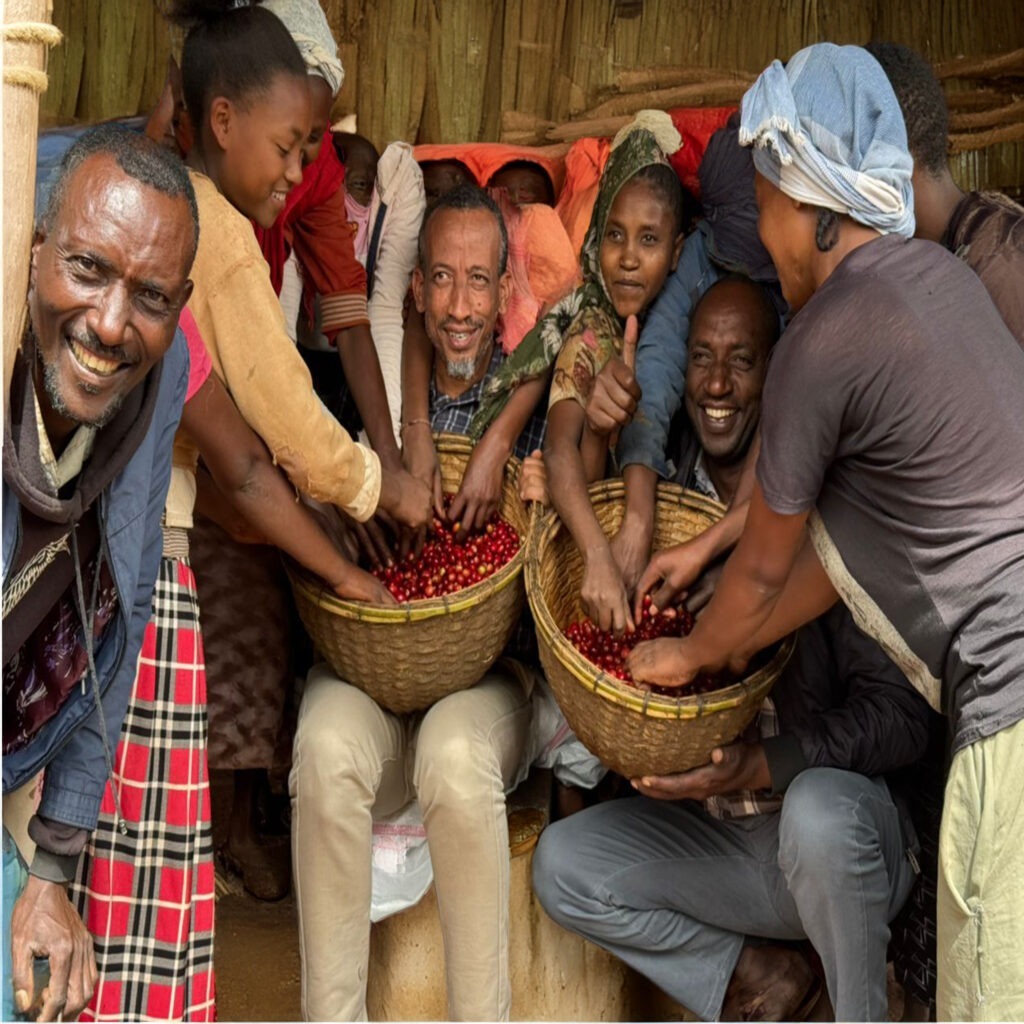
Ethiopian Coffee
Ethiopian Coffee This is a coffee story about my relationship with Ethiopian coffee. We should always remember where people first
It is only when you have travelled to a country and got a feeling for some of its people and their motivations that you can get the slightest glimpse of what is important. Forget everything you have heard and be open to what is in front of you.
According to the NAEB, the National Association Export Development Board, Coffee was first introduced into Rwanda by German missionaries in 1893. Most storytellers will have you believe it was 11 years later. Adolf von Gotzen, of the Catholic church, was the representative of the Rusizi district. It was in 1904 when the first coffee tree was supposedly planted in Gasonga, in the same district. This story stops 90 years later. A cold, dead stop.
Although it is a major event in Rwandan history, I don’t feel comfortable regurgitating these facts. If you are interested, the UN have a fantastic website with timelines leading up to the 100 days of genocide. 30 years later, it still lives on in its people.
Approximately 25% of Rwanda’s exports are coffee. The sector employs something like 400,000 smallholder farmers. You also have many people working at washing stations, drivers, managers and agronomists. Dry Mill owners and operators, and many more. The overall population of Rwanda is thought to be about 14 million. I would (fondly) question anyone about statistics in Rwanda, as most people don’t really know or care about their age.
As you can see below, there is a big area in the West, alongside Lake Kivu and relatively little in the North East.

Rwanda is blessed with rich, fertile volcanic soil, with the majority of coffee growing between 1700 and 2,000 Meters above sea level. The altitude, varietal, and soil type make this a very different outcome than you might experience from another country, such as El Salvador, which also mainly grows red bourbon.
Today, we are seeing new coffee varietals being planted in Rwanda. Like everything, there are good and bad perspectives. Red Bourbon takes a long time to establish, and the yields are a long-term investment. For us, they taste fantastic; however, that’s selfish. Berry borer, wind damage are the tip of the iceberg in terms of the challenges with red bourbon. There is a new variety called RAB C15, which has been released. I have only tasted a few different lots, and the natural process was more forgiving than the washed. From a smallholder’s perspective, a reliable and consistent volume of crop is essential.
The value chain is different in Rwanda. In 2025, the minimum price for coffee cherry in Rwanda went up to 600 Rwandan Francs per kilo. This base price equates to 32p a kilo. Some smallholders will get paid up to 900. This coffee has to be transported and processed, which is highly labour-intensive. Outside of human intervention, that 1Kg of cherry represents a much smaller amount of coffee, too.
Achieving quality, working with smallholders, is a constant. We visited a lady who had grown the biggest cabbage I have ever seen. Sadly, her coffee was flowering out of season, due to not being pruned and cared for properly. Occasional visits from the mill owner, such as Gaston and his chief agronomist, Phocas, give a hand.
This is an important subject to me. In Rwanda, youth unemployment is currently 15.4%. This is only 0.9% more than the UK. The issue is the lack of good jobs. Not so different thus far?
At this point, I am going to take a tangent. We are all driven by something. Laeticia and Gaston at Rwamatamu are driven by finding work for the next generation in every aspect of their lives. Whatever you think you know, that is commendable.
In a wet mill, it would not be unusual to have 200 people working during the day. Sorting, turning and covering cherries for months on end. It is hard work, and the wiry young guys have immense strength.
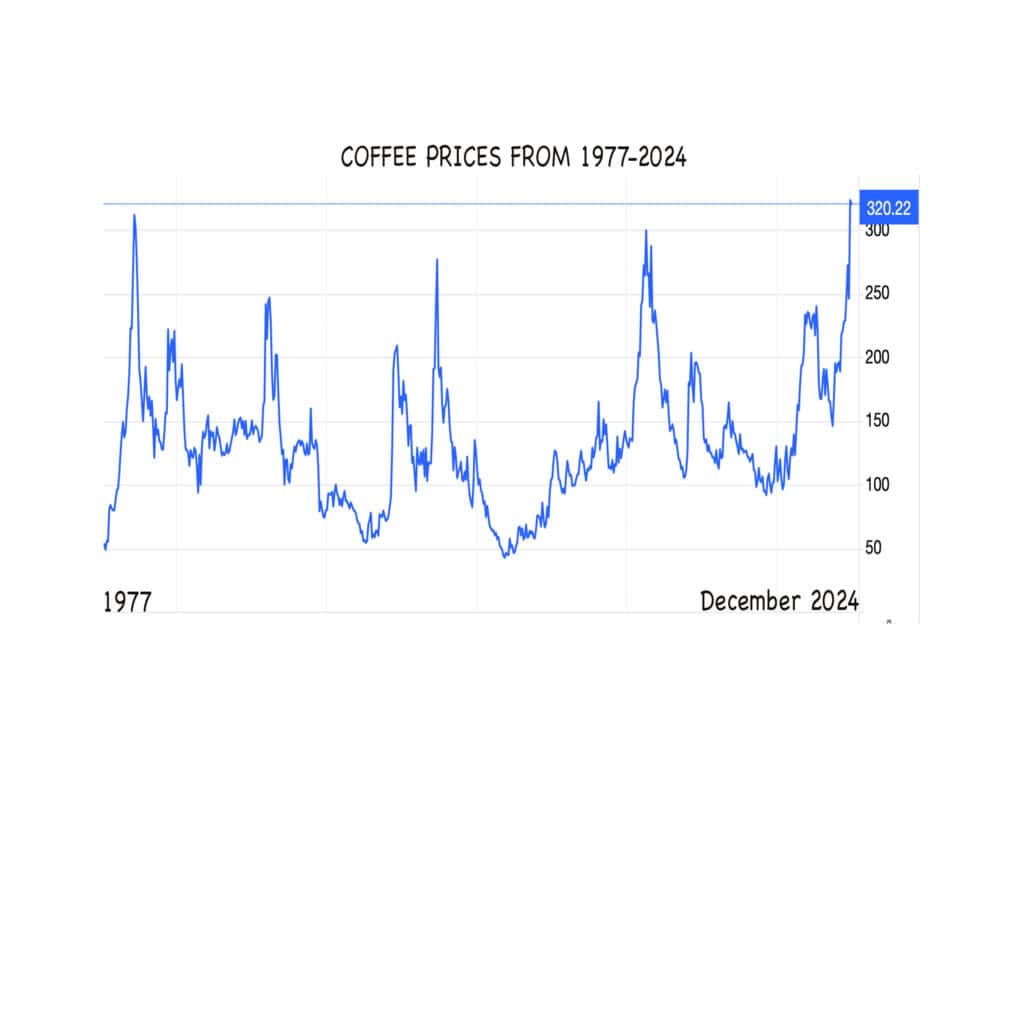
Last year (2024-2025), Rwanda produced 21,000 metric tons of coffee. Domestic consumption is about 5%. With market increases last year, the value of that coffee increased by over 47%, which is fantastic. The national plan is to increase the volume to 32,000 metric tons by 2029.
China is getting a taste for coffee. You may have heard of Luckin Coffee. These guys are clever and can read the signs! In late 2024, they signed a 5-year $1.4 billion contract with Brazil, and I am guessing that added to the market shortages and increases.
I believe that Nestlé planted some experimental coffee in China as long as 100 years ago, 1908 rings a bell. With buying power on a huge scale, coffee can be purchased in volume outside of Western market forces. This makes their companies very strong as they move west and undercut in existing markets.
From a speciality coffee perspective, Rwanda, “Land of a thousand Hills” has the variety, the altitude and that volcanic soil. The combination is unique and, with good processing, can be amongst the best.
There are no big winners or fat cats in this story. In that kilo of cherries, there is an 80% loss, shared by the chain. If Western rules were implemented in Rwanda, it would instantly kill the coffee business, and there would be more unemployment.
The People: Some of the most beautiful I have met. Kind, generous and well turned out, at all times.
The Mission: Produce more excellent coffee and employ more people.
Risk: Any and every crop in the soil is a risk. Climate change is also evident.
Processing: Up until relatively recently, Rwandan coffee majored on fabulous washed coffee. In the 2010-2019 era, we started to see some incredible naturals, too. Over the last few years, anaerobic and yeast inoculation coffees have been growing in popularity. There is a new process about to go live, which some call ” An F1″. This is a hybrid triangular bed formation of ripe cherries, which are covered up on top, but breathable underneath. It is easier to produce than anaerobic and has a wide, ripe, fruity flavour potential.
The Future of growing new coffee varietals in Rwanda, should we be getting excited? (Always!)
Ethiopian Coffee This is a coffee story about my relationship with Ethiopian coffee. We should always remember where people first
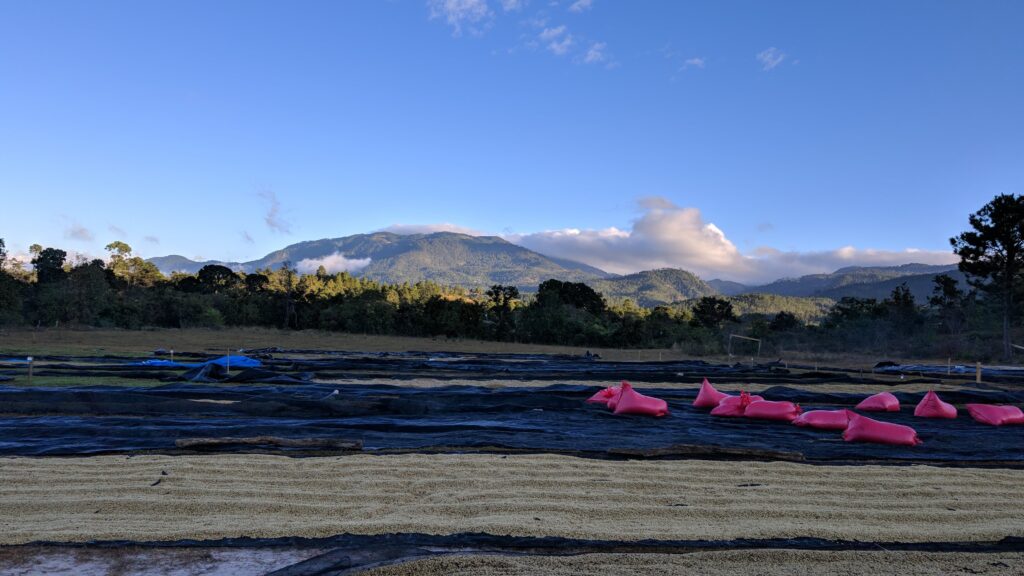
From Struggle to Strength Honduras How the Mayorga Family is Building a Better Future Through Coffee The past year has
How The World Coffee Market Has Affected The Cost Of My Cup Of Coffee Most of us like things to
Why has my coffee gone up? In November the world coffee market went through the roof. Existing contracts with producers

The Fellow Aiden Brewer Review After COVID-19, I promised (mainly to myself) not to sell “stuff” for the sake of
Market Highs You may have heard that coffee has reached an all-time high in the commodity markets. I don’t want

Subscriptions Explained Coffee Subscriptions at James Gourmet Coffee Co. We aim to make this easy for you! Buy a subscription
Sugar in Coffee Coffee in its raw state is a seed of a cherry-like fruit. It has some forms of