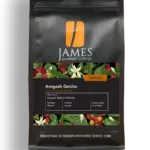
Due to popular demand, we are offering this nano lot from Aregash. This is from last harvest, as we have new crop on the water soon. There is something that no other country can replicate, which is the depth of a natural Ethiopian coffee.
This is one of a handful of small lots sourced from our friends at Omwani. They have partnered with Mecota Trading in Ethiopia, who work with smallholder producers to help bring these smaller single-farmer lots to market, whilst paying them enough. This is a huge subject that I am going to try and articulate.
Farmer: Aregash Gelcha
Ethiopian Exporter: Mecota Trading
Area: Halo Bariti, Yirgacheffe
Region: Gedeb, Gedio, Ethiopia
Varietal: JARC: 74110 & Kurume. More information on Ethiopian coffee varietals here.
Altitude: 2,150 meters Above Sea Level
Process: Natural
Roast Level: One Roast
Gelcha’s farm is located in Halo Shashemene village, within Halo Bariti kebele, part of the Gedeb district in the Gedio zone, Eastern Southern Ethiopia. This region is known for producing some of the best coffees in Yirgacheffe and arguably the world. On her 5-hectare farm, Aragash grows coffee as a cash crop alongside enset (false banana) and fruit trees to feed her 12 children (6 daughters, 6 sons).
Despite the market fluctuations and the ability to (theoretically be able to) export, Aragash and her family continue to produce an average of 800 kg of green coffee per hectare. During the off-season, the entire family works together to apply best agronomic practices, ensuring the health and sustainability of the farm.
Based on 60-65g per litre
| Aromatics: Rich & Red Fruity| Body: Creamy | Acidity: Soft, Sweet and Low |
On opening, this is delicate and floral with brown fruit sugars, verging on being “Cola-esque”, with a long finish. After a while, there is another level of sweetness, like caramel and carob, with a black tea-like finish. In the final cooling stages of the brew, there is a ripe, “red-liquorice-lace” boozy grape moment, for those patient enough to wait.
I find myself torn here. We have all been drinking this as filter all week and loving it. I pulled out the most inferior commercial grinder in the showroom (Anfim Luna), and it dialled in really easily. It cut through 9 and 6oz milk-based drinks, and the espresso “worked”, but the essence was somehow missing from a well-brewed filter. There it is: bias. I am only putting milk near coffee out of necessity on these warm days. This is and should always be about what you like.
Milk-based drinks: (16-18g) We aim for 17.5g(ground coffee) into 34-36g of espresso liquid in around 30 seconds. 94C
9oz Milk-based Drink: Soft, ripe, fruity dessert more than coffee.
6oz Milk-based drink: Ripe fruit sugars, citrus and cocoa. This is bolder, more obviously coffee.
I tend to prefer longer shots for espresso. There is no right and wrong here, infact I would say brew how YOU like coffee to be. This could be a good future subject to explore. The espresso was weirdly low acidity and balanced.
I worked on 17g of ground coffee into 50g of espresso liquid in 35 +/-seconds. 94C
Big, brown, fruity, ripe sugars, with a lingering black tea & citrus finish.