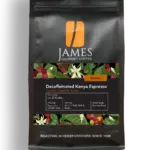
Decaffeination Process: Sugar Cane or Ethyl Acetate (as we say these days)
Regions and Varietals: Kericho County
Altitude: 1400-2000 meters above sea level.
Process: Fully washed and then decaffeinated
Potential Varietals: Ruiri 11, SL28, SL34, and Batian.
This coffee has been sourced through Omwani and Sydney at Lot 20 Coffee. These guys are working on the ground across the best bits of African coffee. Sydney Kibet is one of those guys who has achieved so many things that it makes the rest of us look ordinary at best.
As I understand it, Sydney set up Lot 20 as a side project from his day job of computer programming. His plan was (and still is) to add value to producers in the up-and-coming volcanic region, known as The Southern Rift of Kenya. Adding value can come in the form of co-fermentation (re-fermenting coffee in parchment with dried tropical fruit; this is popular in some places. Sydney really appreciates people who are involved in detail. I remember him saying, “Those women are amazing”, regarding the ladies standing by the drying beds, sorting out the unripe cherries. It is a laborious job that gets little thanks. When we were in Rwanda last year, Sydney was the go-to guy for yeast! There has been a lot of interest in adding different yeasts to coffee, which has been interesting.
One of the realities with Kenya coffee, for me, is that I haven’t experienced coffees like the ones we had years ago. There may be the SL28 listed above, but it may be a small percentage where the Ruiri used to be.
In Espresso:
Brewed on a 10-year-old La Marzocco PB with an Anfim Lunar grinder.
Kenya Espresso used to divide crowds. If your favourite coffee is juicy and fruity, then we are halfway there. This is a pretty developed Espresso, enough for you to feel that when the coffee is rested, you are not drinking citric acid. For the record, I love acidity; I just want to be balanced and fair in my description.
I feel a twinge of guilt here, but I felt that our normal recipe range worked really well for this coffee. We brewed 18g of coffee into 35g of espresso liquid for milk-based drinks. 26-32 seconds was where this worked really well. Too easy! 94C was the starting point, as it’s where most machines sit.
9oz Milk-based drink: Wildly sweet, with some super currant flavours.
6oz Milk-based drink: Less of the milk sugars, more currants, citrus and cocoa.
Espresso: Recipe: 17.5-18g of coffee into 45- 50 g of liquid.
I found the sweet spot was a little over 30 seconds. I know that the word sticky isn’t a flavour, but the body was like treacle. Big sweetness and compressed currants and some citrus. There was no trace of any decaffeination with this in espresso.