Over the last few years, we have had such a range of great coffees from Cafesmo. Their unrelenting drive to grow and produce better coffee is incredible.
This is a simple “co-op” lot that has been decaffeinated. If it wasn’t for my enthusiasm for caffeine in the morning, I would be happy to take this home!
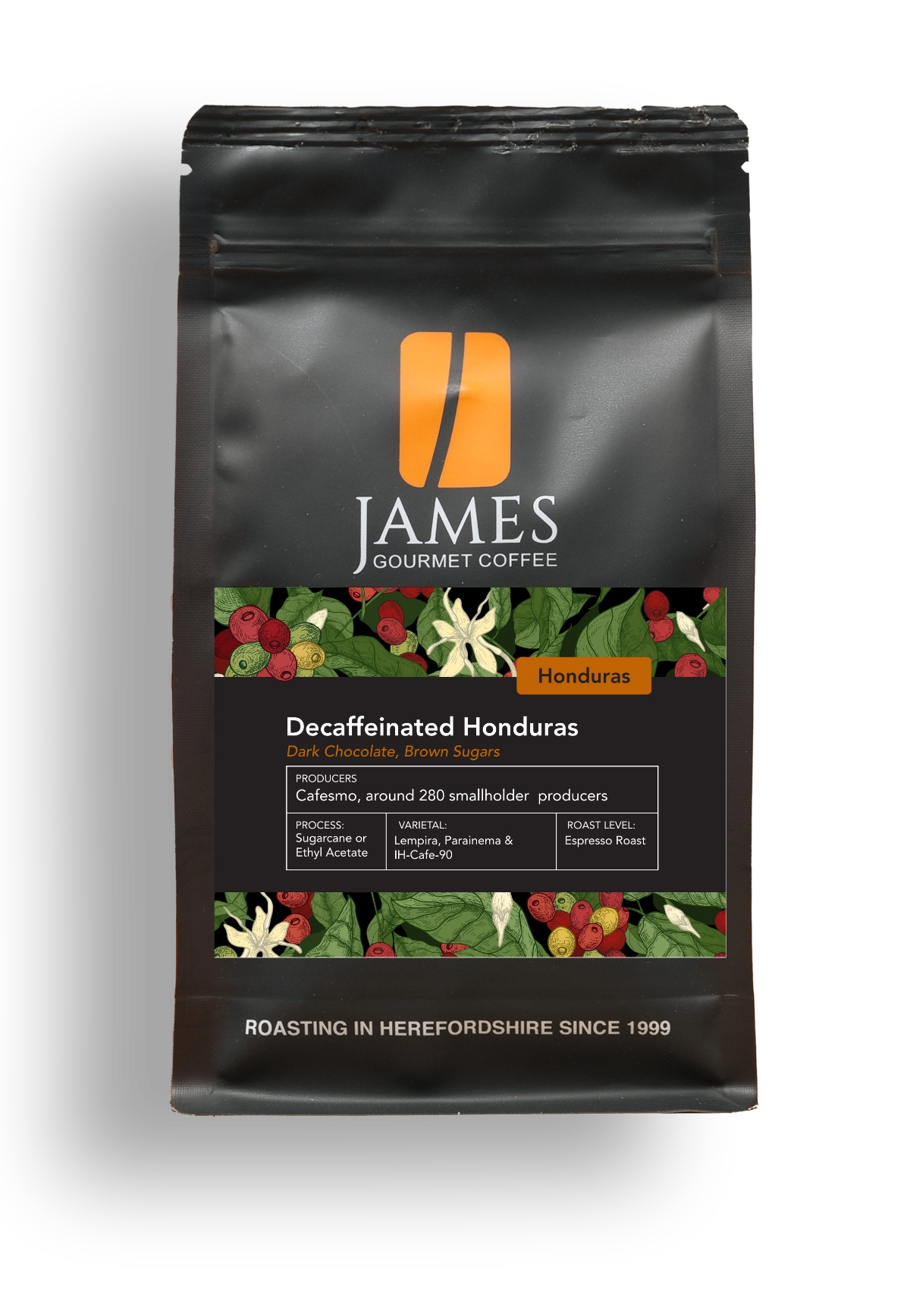
Decaffeination Process: Sugarcane or Ethyl Acetate (as we say these days)
Producers: Cafesmo, around 280 smallholder producers, all with Fairtrade, organic, and rainforest certifications.
Region: Las Mercedes, in the region of Ocotepeque, south of Honduras, close to the borders of Guatemala and El Salvador.
Varietals: Lempira, Parainema, and IH-Café-90
Drying: Patio
Process: Fully washed
Altitude: 1200-1600 meters
Harvest period: November to February.
This coffee has taken a few years to become a reality. The initial hope was to “just produce a decaffeinated coffee” in Honduras. The factors that dominated things were the physical cost and time of the setup. The team at Cafesmo are young, energetic, and brilliant; however, some things take time and money!
This lot has taken as long to to travel from Germany, as it has from Honduras. The low river levels meant that Barges have only been able to carry 1/4 of the usual freight across the country. This is before we open the subject of the efficiency and costs of UK warehousing.
Cafesmo states “united we stand strong, and together we stand for : ‘diversity and quality’”.
The cooperative has around 280 members with smallholdings between 2 and 6 hectares. All members (producers) hold Fair Trade, Organic, and Rainforest Alliance certifications.
As espresso, there is no surprise in how good it is. High-quality ingredients are always a great place to start.
We brewed this with 16, 17 and 18g of coffee at 94 °C. 27-35 seconds. We found that the lighter doses ( 16g of coffee) brought out the most acidity, and it was this that cut through the milk when extracted longer and carefully, which added something that came through milk drinks better than the 17g. 18g was king, as the milk-based drinks were cosy. The espresso has rounded acidity and a chocolatey note, rather than your favourite rendition of citric acid.
9oz Milk-based drink: Malty, chocolatey and caramelised, and there is no hint of decaf here!
6oz milk-based drink: Dark chocolate and cocoa.
Espresso: 18g of coffee into 45-50g of espresso in 30-35 seconds
Espresso: Dark chocolate, brown sugars, low-sweet acidity.