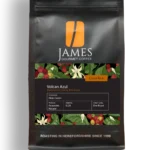
Farmer: Alejo Castro
Farm Volcan Azul
Area: Alajuela, Costa Rica.
Established: 1850, 5th-generation farm.
Hectares: 55
Altitude: 1540-1720 Meters above sea level
Varietal: SL28 Most famous for making great Kenyan coffee, blackcurranty.
Before I start waffling about this coffee, there is a real threat in accessing the SL varietals in Kenya, where the famed blackcurrant coffee was first grown, up to 100 years ago. Today, Coffee Berry Disease and rust issues are making it very difficult to grow there. As opposed to simply competing with other producers in different parts of the world, Alejo has been processing the SL28 in innovative ways over the last few years. We can buy a nano lot like this and buy up to 150Kgs, alongside the other coffees we buy from him.
Volcan Azul is a 5th-generation farm, producing many different single varietals and processes. The long game is the aim of quality, which we especially like at James Gourmet. The whole process is controlled by the farm and the operation is relatively small. These are all things that work for us. Coffee on a human scale with a history.
Aromatics: Boozy Chocolate| Body: Medium- creamy on cooling| Acidity: Currants|
Coffee is wildly subjective, but this was my experience with Costa Rica Volcan Azul SL28 One Roast in various cupping bowls and brews.
This coffee opens up with deep berry depth, chocolate and a savoury, chocolatey booze. For me, this is like romance blossoming in a cup, blooming into something deeper and more beautiful as it infuses, to a point.
The balance of soft berry acidity and rich dark chocolate oscillates. This is an anaerobic black forest gateau, if there ever was such a thing. As with all of the coffees we have bought from Alejo (since 2019), this SL (Scottish Laboratory) is up there at the top for me.
Espresso Recipe
Standard temp 94C
16.5-18g of coffee into 45-50g of espresso in 30-35 seconds.
I started brewing this in espresso with “why?’ Why would anyone in their right mind put this in espresso? To add to my silliness, I wasted a fair bit of coffee dialling in because I was using an unfamiliar grinder, too.
In espresso, it works. The complexity of the cupping bowl is condensed a little, and the fruit is slightly different again. The fruit is sweet and dry, like cranberries, but the wild depth of processing makes this one for contemplation.
I wanted to shun the milk-based drinks too, but got that wrong, too. Having made a round of milk-based drinks for the team, the lab smelled more like a chocolate shop than coffee. The subtle ripe fruit and cocoa combination was so good on cooling.
9oz- 16-18g coffee, 34g out, target of 30 (ish) seconds extraction. The above was the 9oz.
6oz: This is all down to taste. Personally, if I were going to make lots of these, I would increase the brew temperature, just for this drink. For me, there was just a little too much “funk” in the crema of the drink. For me, I enjoyed the 9oz and the espresso more.